What is Shopfloor Management?
The term Shopfloor Management refers to a leadership method aimed at managing the production area efficiently and effectively. It is important that employees work together so problems can be identified quickly and solutions found to implement continuous improvements.
Implementation of Shopfloor Management:
The implementation of Shopfloor Management begins with creating a clear structure in which goals and responsibilities are defined. Leaders determine which improvements should be achieved through Shopfloor Management.
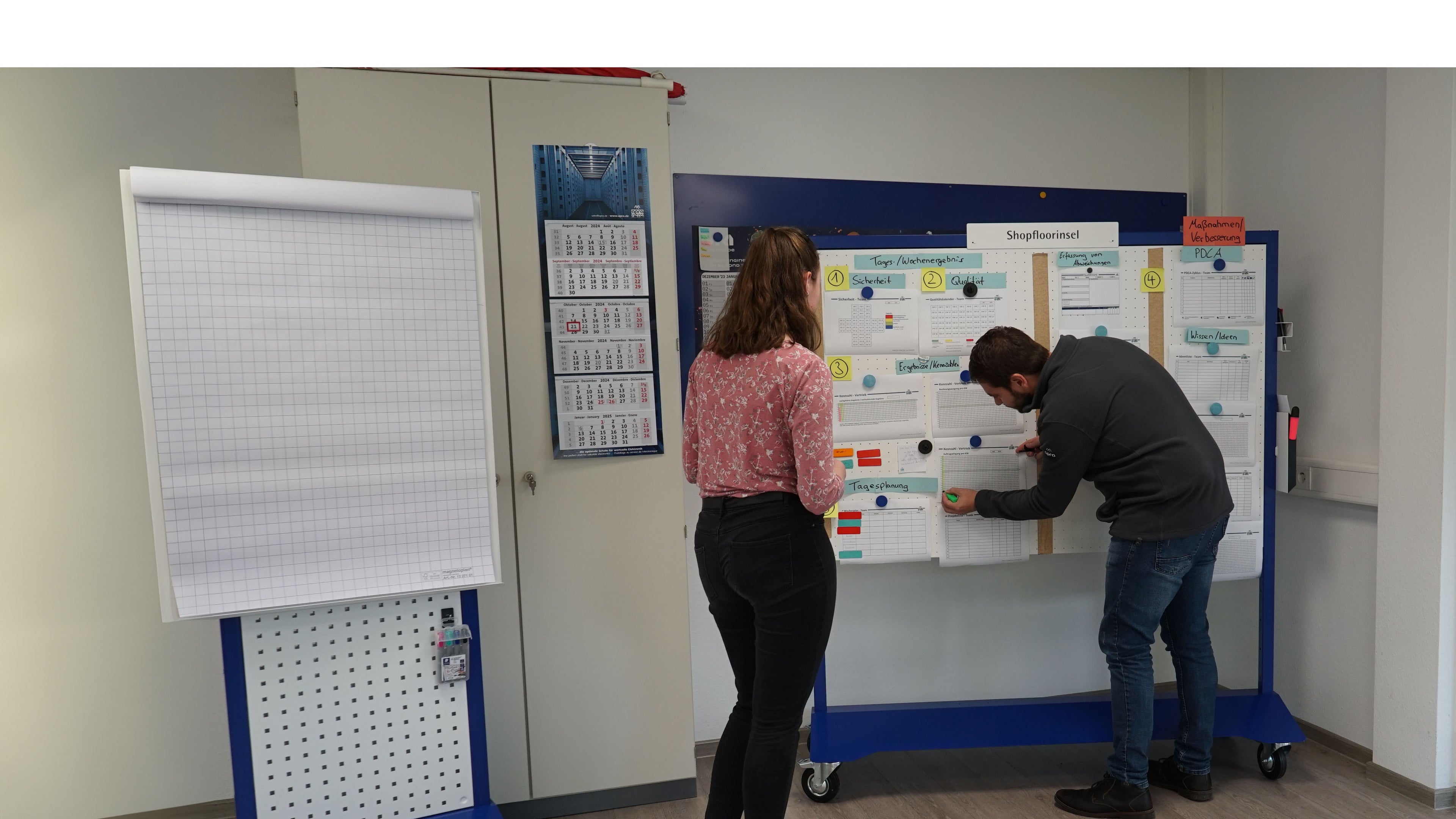
A central component of Shopfloor Management is regular shopfloor meetings, which usually take place daily or weekly. These meetings address current topics, e.g., a review of the previous day, current production figures and quality metrics, as well as specific challenges. Causes of problems are identified together and improvement measures are determined. These meetings also actively involve employees in decision-making processes, which increases their personal accountability. Close collaboration fosters knowledge and skills, leading to better decisions and more efficient problem solving.
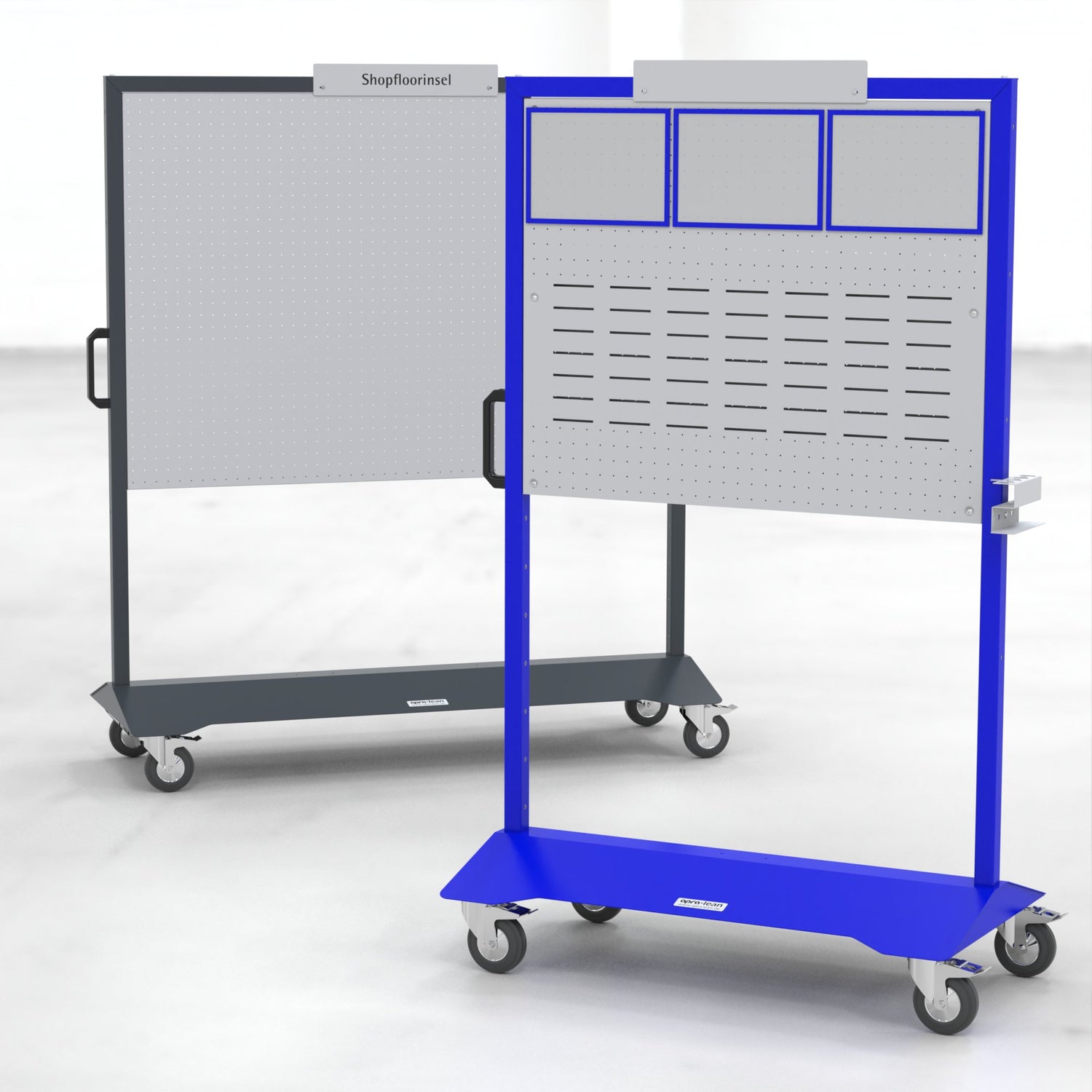
Another key element is the visualization of relevant metrics directly on the shopfloor board. Important information such as production numbers, quality indicators, machine availability and scrap rates are displayed there. These visualizations are updated regularly and give everyone involved a clear orientation about production status and targets. A simple and clear presentation of the metrics is crucial to provide employees with an immediate overview and transparency.
Continuous improvement, also called Kaizen, forms the foundation of Shopfloor Management. Employees' improvement suggestions are collected, evaluated in a structured way and implemented. Every improvement is documented and visualized to make success visible. In addition, the team regularly — usually monthly or quarterly — reflects on progress and reviews how Shopfloor Management is functioning overall and what further optimization potential exists.
In which areas can Shopfloor Management be used?
Shopfloor Management is a versatile concept that originally comes from the production environment but can be successfully applied in many other areas. Shopfloor Management is also used in logistics and warehousing. Here it helps to coordinate workflows efficiently, keep inventory under control and ensure timely delivery of goods.
Another important area of application is the maintenance and servicing of machines and equipment. Shopfloor Management provides structured monitoring and early detection of faults, optimizes maintenance processes and can increase equipment availability. Shopfloor Management can also be applied in service and customer support. It helps to shorten response times and improve service quality.
In healthcare, Shopfloor Management is used to optimize processes and improve collaboration between different departments. Teams can regularly discuss current challenges, which improves patient care quality through direct communication and rapid problem solving.
Another application is found in construction and project management, where Shopfloor Management helps improve coordination between teams and trades. Regular on-site coordination and visualization of project status and progress enable flexible adjustment to current challenges and help ensure projects are completed on schedule.
Shopfloor Management is also gaining importance in administrative and office areas. In office Shopfloor Management, transparency of administrative processes is the focus, with the aim of reducing lead times and optimizing team collaboration.
Goals of Shopfloor Management:
Increase efficiency
Through direct communication and immediate problem solving on the shopfloor, production processes can be continuously optimized. This leads to increased productivity and efficient use of resources.
Quality improvement
Early detection and correction of errors reduces scrap and rework, improving overall product quality. By closely monitoring production processes, quality standards can be consistently maintained.
Fast response to problems
The regular presence of leaders on the shopfloor and the short daily meetings (shopfloor meetings) enable rapid identification and resolution of problems. This minimizes downtime and prevents small issues from becoming larger disruptions.
Increase employee motivation and engagement
Active involvement of employees in decision-making processes strengthens responsibility and ownership. Employees who can contribute their ideas and suggestions are generally more motivated and engaged, contributing to a positive working atmosphere.